Showing posts with label Eastern Orthodox. Show all posts

Friday, May 03, 2013

Rehabilitating Nestorius (Part Two)


It should come as no surprise then that the near-immediate result of Chalcedon was major schism, on both sides of the divide: those who could not assent to the condemnation of Nestorius as well as those who judged that Dioscorus of Alexandria had been unfairly deposed. In the latter case, nearly the entire ancient Church of Alexandria, Cyril's former see, would break away from the rest of the Orthodox world. (The Coptic Orthodox Church descends from this break.)

Monday, April 29, 2013

Rehabilitating Nestorius (Part One): Historical Background


Like the his compatriots of the Antiochene school, Nestorius was a dyophysite, ironically, the position that would ultimately win the day at the Council of Chalcedon (451). Had it been as simple as the question of one or two natures, history might have been kinder to Nestorius, perhaps even vindicating him as the champion of orthodoxy rather than Cyril. But Nestorius's misstep was in the way he went about articulating the dyophysite position. For Nestorius, the two-natures Christology necessitated the reality of two corresponding hypostases or subsistences, each the proper and unique subject of its own nature. But if this were the case then how could a true union of the divine and human in Christ be posited?

Thursday, June 21, 2007

Science and Eastern Orthodoxy

LINK

LIGHT FROM THE EAST: Theology, Science and the Eastern Orthodox Tradition
by Alexei V. Nesteruk
Fortress Press (2003)

In the non-Orthodox world, a lively dialogue between science and theology has been taking place for decades. Among Orthodox, however, the theological response to modern scientific theory has hitherto been extremely muted. It has therefore been with great anticipation that they have awaited the study by Alexei Nesteruk which has now been published. For Nesteruk, as well as being a member of the Orthodox Church, is also a researcher at the University of Portsmouth, and, as such, he is someone who can speak of the scientific enterprise from within.

As a mathematical physicist, Nesteruk has clearly decided to stick to those aspects of science that he knows well. Some might regard this as a pity, since it leads him to ignore almost entirely the theological questions arising from some of the aspects of modern scientific theory that Christians tend to find the most disturbing, such as neo-Darwinism. This is, however, less of a problem that might appear at first sight, since Nesteruk’s approach is far more subtle than that of those Western theologians, who – through a methodology of beginning with questions about the perceived dissonance of science and theology – often by-pass important and necessary questions about the nature of the two disciplines.

His fundamental thesis is, in fact, not that theology and science can be interpreted in terms of some surfacelevel consonance, but rather that both can be “reinstated to their proper relationship to the Eucharist,understood in cosmic terms as the offering of creation back to God through art, science, and technology.” In this context, he goes on, scientific activity can be treated as a cosmic eucharistic work (a “cosmic liturgy”). Science can thus be seen as a mode of religious experience, a view obvious to those scientists who participate in ecclesial communities, but as yet undemonstrated to those outside such communities, (p.2).

To illustrate this view, Nesteruk provides, in the second half of the book, a number of extremely interesting but scientifically complex arguments. This scientifically informed argument is, however, based on a more general attempt, in the first half of the book, to develop a patristically-oriented rationale for seeing the sciences as an important aspect of our contemplation of divine realities. To expand on this he provides an extremely thought-provoking analysis of the patristic use of apophatic and cataphatic language in relation to God. He links this way of using theological language to the way in which God must be seen as immanent in the cosmos and yet as utterly transcending it. Like many Orthodox commentators, he sees the witness of St. Maximus the Confessor – especially in relation to the concept of the logoi of created things having their origin in the Logos himself – as central to the development of a contemporary understanding.

A recognition of the importance of this book does not, of course, imply that it is beyond reproach. Being both ambitious and complex, it inevitably has many features that raise critical questions. Some, for example, may wonder whether the concept of hypostasis can really carry the weight that Nesteruk makes it bear. Others,perhaps, will wonder whether a modern Orthodox theology really requires a utilizing of neo-Platonic categories of the sort that is attempted here (and, even if it does, whether modern cosmology can be used to underpin this usage in the way Nesteruk suggests). Perhaps more important than any of these questions, however, is one that arises from the way in which Nesteruk has – as he candidly admits – “been deeply influenced by the ideas of [the Presbyterian theologian] Thomas Torrance” (p. 2). These ideas are, admittedly, themselves deeply influenced by patristic (and especially Alexandrian) perspectives. They are also, however, rooted in important strands of continental Protestant (‘neoorthodox’) theology, and it is far from clear that Nesteruk has taken this adequately into account.

To recognize that such questions are posed by Nesteruk’s approach is not, however, to diminish the importance of what he has done. On the contrary, it bears witness to it. For, by setting off trains of thought of this kind, Nesteruk has surely done an invaluable service, both to his fellow Orthodox – who can now begin to see the sciences in a new and positive light – and to non-Orthodox, who can now see a way in which their own ongoing dialogue of science and theology can be expanded and deepened by Orthodox perspectives.

Nesteruk himself is modest enough to recognize (p. 12) that his efforts represent no more than “first steps ... with no pretensions to completing the enormous task” that lies ahead. It is, however, the first steps in any journey that are the most important, and for this particular journey Nesteruk has arguably not only pointed us in the right direction, but also provided us with many of the vehicles that we shall need as we progress. Our long term judgements of some of his specific arguments may, perhaps, turn out to be negative ones. Even if this is so, however, this will not prevent him from being remembered, in the history of the Orthodox Church, as the pioneer of a new frontier that had for too long remained unexplored. As the first clear expositor of the view that science is a cosmic eucharistic work and a mode of religious experience, he has begun a phase of Orthodox theological reflection which may have truly momentous consequences.

Christopher C. Knight
Condensed from SOUROZH:
A Journal of Orthodox Life and Thought, 2003, N 94, pp.45-49
Also reviewed in ESSSAT News, 13.4

Monday, December 18, 2006

It's all Greek to me?? Hardly...


Last Sunday I took my worship class on a fieldtrip to our local Greek Orthodox Cathedral here in Houston for the Sunday Divine Liturgy. The purpose of the trip was solely pedagogical, yet I could not help reflecting on the sad state of my own denomination, and my commitment to remain a part of the Anglican tradition.

Admittedly, the service felt a little alien to me at first, despite the fact that I was quite able to follow the liturgy, and even to respond in Greek somewhat proficiently. That being said, the liturgy was enthralling, and before I knew it I was musing that I could quickly get used to worshipping in this manner on a weekly basis. Then it hit me. I already affirmed everything they affirmed. I believed as they believed. There were no obstacles -- not doctrine, not icons, not piety, not the filioque -- standing in the way of my becoming Orthodox (with a "big-O"), that is, if I so desired. Nothing at all. So naturally I was faced with the question: as a "small-o" orthodox Christian, why remain Anglican?

On the way home that afternoon, I came up with three answers (only two of which I'm ready to share with my readers. The third, still provisional, will have to wait):

(1) I remain Anglican because the Anglican way of orthodoxy is something worth staying in and fighting for. In its best expressions, Anglicanism is a wondrously beautiful vehicle for the transmission of the orthodox faith. Not only do I believe it can be so in the future, but I believe it is so now in the present (albeit in limited contexts). The loss of Anglicanism to the cancer of relativity, God forbid, would be a loss not only for a few Episcopalians, but a loss for the whole Body of Christ as well. Some of my friends have suggested that the Western-Rite option in Eastern Orthodoxy could easily fill this void. My response: Anglicanism is a natural home for orthodoxy (small-o), but Orthodoxy (big-O) could never be a natural home for Anglicanism.

(2) I remain Anglican because I am culturally an Anglican Christian, and I see my culture as a heritage entrusted to me to pass on to future generations. Surely, some of my friends might object, "What profit is there in saving your culture only to lose your soul?" However, I think this is a false dichotomy. As I looked around at the mostly Greek congregation gathered in that Greek Orthodox Cathedral during its Greek liturgy, it was obvious to me that, for that particular congregation, being "Greek" and being "Christian" were practically co-terminous. Corporately speaking, culture is the soul of a church. The Christian Faith is fundamentally incarnational, and thus it naturally incarnates itself in culture -- be it Greek or British.

Simply put, I am an Anglican Christian, I can be no other.

Until next time.

P.S. I'm still pondering this question, of course.

Thursday, August 24, 2006

Thursday, June 29, 2006

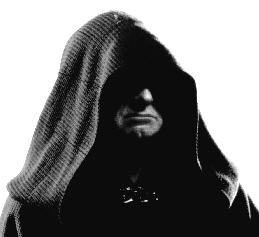
The Dark Lord of the Sith chimes in...


"The subordination of the Persons to the essence, inherent in the structure of his theology, also provides Augustine with the means to attempt to distinguish the Persons from each other. Having assumed an absolute simplicity, the Persons can no longer be absolute hypostases, but are merely relative terms to each other, thus occuring on an even lower plane than the attribute proper. 'The terms (Father, Son, and Holy Spirit) are used reciprocally and in relation to each other' [Augustine De Trinitate, 1:8:15]. There is a subtle, but nevertheless, real play of the dialectic of oppositions here. One no longer begins with the Three Persons and then moves to consider their relations, but begins with their relative quality, the relation between the Persons, itself. In other words, there is an artificial opposition of one Person to the other two. It is at this point that the flexibility of Augustine's Neoplatonic commitment begins to surface in a more acute form."

--Joseph Farrell, Introduction to The Mystagogy of the Holy Spirit of our Father among the Saints, Photius the Great, Patriarch of Constantiople (2001), p. xx-xxi.

Wednesday, June 28, 2006

Soundbite from Saint Photius the Great


"For it is not, I repeat, not the nature -- in other words, that which is common among the Three Hypostases -- which is worshipped, but the specific personal distinctions whereby the Hypostases of the Trinity are distinguished."

--Patriarch Photius, Concerning the Mystagogy of the Holy Spirit, 47 (translation by Joseph Farrell).

Sunday, May 21, 2006

The Question of Papal Primacy


[A very interesting take from Archbishop Keshishian of the Armenian Apostolic Church on the ecumenical obstacles of papal primacy. Enjoy!]

By establishing a church in Rome, Peter naturally exercised his personal prerogatives, and the spirit of Petrine privilege remained attached to the local church of Rome. But this never implies a divinely instituted universal jurisdiction for the Bishop of Rome. In the position of the Roman Catholic church I see three problematic elements:
  • First, the very concept of individual succession carries with it, ecclesiologically speaking, a fundamental contradiction: how can the Bishop of Rome embody, either potentially or actually, two episcopal authorities, namely local and universal? One is led to think that the office of Rome is absorbed in the universal trans-apostolic office. If it is so, then the claim of Vatican I for universal jurisdictional power lacks any ecclesiological foundation.
  • Secondly, the bishops, individually or collectively, are not successors of individual apostles but the apostolic college as a whole, and they receive their ministerial power directly from Christ. Therefore, the chair of an apostle or apostolic succession, that is the sedes (the chair), and the sedens (its occupant), must be differentiated. This is very important. For example, the Coptic Patriarchate of Alexandria is the chair of St. Mark; but the Patriarch of the Coptic Church is not the successor of St. Mark. Again, St. Thaddaeus and St. Bartholomew are the founders of the Armenian Church; but the head of the Armenian Church does not claim to be a successor of these apostles. This is true of all the churches which are founded by the apostles.
  • Thirdly, there are Catholic theologians who still firmly maintain that the pope claims universal jurisdiction not only as the successor of Peter, but also the Vicar of Christ. This further complicates the problem.

--Orthodox Perspectives on Mission, p. 70.

Sunday, May 14, 2006

Anglican and Orthodox Differences in Ecclesiology


I found this helpful statement, which I think captures the heart of the issue, in an article by Fr. John Daly, a former Episcopalian turned Eastern Orthodox. The link is provided below:

"...While we agree that the Church is one, holy, catholic and apostolic, we are not agreed on the account to be given of the sinfulness and division which is to be observed in the life of Christian communities. For Anglicans, because the Church under Christ it is the community where God’s grace is at work, healing and transforming sinful men and women; and because grace in the Church is mediated through those who are themselves undergoing such transformation, the struggle between grace and sin is seen as characteristic of, rather than accidental to, the Church on earth. Orthodox while agreeing that the human members of the Church on earth are sinful, do not believe that sinfulness should be ascribed to the Church as the Body of Christ indwelt by the Holy Spirit."

(Problems of Ecclesiology between Anglicans and Orthodox in the Dublin Agreed Statement, 1984. See http://www.westernorthodox.com/daly)