Showing posts with label Arminianism. Show all posts
Sunday, May 19, 2013
Theodicy and Determinism: Leibniz's Folly of the "Best Possible World"
The theodicy conundrum is typically set up as a "best possible worlds" dilemma: of all possible worlds that could have been created, why would an all-loving, all-knowing, and all-powerful God create a world in which evil and suffering exist? Why did God create the circumstances that would allow Adam to sin? These questions, the stuff of anti-theist rejoinders, have been the perennial bane of Christ theology for time immemorial.
Read the Article here.
Labels:
Arminianism,
Calvinism,
Determinism,
Election,
Eternity,
Platonism,
Theodicy
Saturday, November 25, 2006
Who wrote the following statement? C'mon, take a guess...
"I recommend that the Commentaries of Calvin be read, whom I extol in higher terms than Helmichius himself, as he owned to me, ever did. For I affirm that in the interpretation of the Scriptures Calvin is incomparable, and that his Commentaries are more to be valued than anything that is handed down to us in the Bibliotheca of the Fathers; so much so, that I concede to him a certain spirit of prophecy in which he stands distinguished above all others, above most, yea above all. His Institutes, so far as respects Commonplaces, I give out to be read after the Catechism, as a more extended explanation. But here I add -- with discrimination, as the writing of all men ought to be read."
Tuesday, November 21, 2006
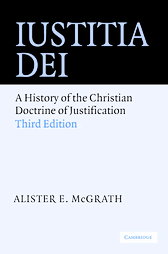
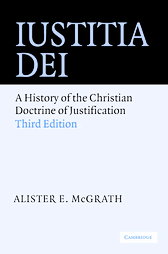
McGrath on English "Arminianism"

Although there can be little doubt that the Reformed doctrine of election continued to be widely held, particularly within Puritan circles, increasing opposition to the doctrine, largely from academic sources, was evident in the early seventeenth century. Thus Richard Hooker at Oxford, and Launcelot Andrewes at Cambridge, developed an 'Arminianism before Arminius', which received considerable impetus through the influence of William Laud, subsequently translated to Canterbury. Like Vincent of Lerins, Andrewes declined to support the latest continental speculation on predestination precisely because he felt it to be an evident innovation. The Arminianism of the leading divines of the period -- and the intense hostility towards them from Puritans -- is perhaps best illustrated from the controversy surrounding the publication of Henry Hammond's Practical Catechism in 1644. This work may be regarded as a classic statement of the soteriological convictions of the Laudian party, asserting unequivocally that Christ died for all men. This view was variously described by his opponents: Cheynell accused him of subscribing to the doctrine of universal salvation; others charged him with Arminianism. The response of Charles Barksdale to this latter charge is particularly significant:
"You are mistaken when you think the Doctrine of Universall Redemption Arminianisme. It was the Doctrine of the Church of England before Arminius was borne. We learne it out of the old Church-Catechisme. I believe in Iesus Christ, Who hath redeemed mee and all mankind. And the Church hath learned it out of the plaine Scripture, where Christ is the Lamb of God that taketh away the sinnes of the world."
In this, Barksdale must be regarded as substantially correct. The Bezan doctrine of limited atonement was somewhat late in arriving in England, by which time the older Melanchthonian view had become incorporated into the confessional material of the English national church -- such as the catechism of 1549. This evidently poses a nice problem in relation to terminology: should one style men such as Peter Baro (d. 1599) as an 'Arminian avant la lettre', or accept that their teaching was typical of the period before the Arminian controversy brought the matter to a head and a new theological term into existence? Most Anglican divines in the late sixteenth and early seventeenth centuries appear to have based their soteriology on the dialectic between universal redemption and universal salvation, declining to accept the Bezan solution of their Puritan opponents...
--Iustitia Dei, p. 293-294.
Labels:
Arminianism,
Calvinism,
English Reformation,
McGrath
Friday, November 17, 2006
The Influence of the British Commission at the Synod of Dort, 1619

The following excerpt comes from Peter White's definitive work, Predestination, Policy, and Polemic: Conflict and Consensus in the English Church from the Reformation to the Civl War (CUP, 1992), page 198.
+++++++++++++
Even more striking are the British comments on the rejectio errorum under this head [Fifth Head -- Perseverance]. By far the most important was their successful request to exclude from condemnation those who taught that true believers and regenerate ('vere credentes et regenitos') were able to fall from the faith of justification. The reasons they gave merit attention:
We ourselves think that this doctrine is contrary to Holy Scripture, but whether it is expedient to condemn it in these our canons needs great deliberation. On the contrary, it would appearThose powerful arguments were effective, and the canon was dropped. As a corollary, the British also asked for the doctrine that temporary faith differed from justifying and saving faith only in duration not to be rejected by the synod...
1. That Augustine, Prosper and the other Fathers who propounded the doctrine of absolute predestination and who opposed the Pelagians, seem to have conceded that certain of those who are not predestined can attain the state of regeneration and justification. Indeed, they use this very argument as an illustration of the deep mystery of predestination; which cannot be unknown to those who have even a modest acquaintance with their writings [!].
2. That we ought not without grave cause to give offence to the Lutheran churches, who in this matter, it is clear, think differently.
3. That (which is of greater significance) in the Reformed churches themselves, any learned and saintly men who are at one with us in defending absolute predestination, nevertheless think that certain of those who are truly regenerated and justified, are able to fall from that state and to perish and that this happens eventually to all those, whom God has not ordained in the decree of election infallibly to eternal life. Finally we cannot deny that there are some places in Scripture which apparently support this opinion, and which have persuaded learned and pious men, not without a great probability.
Labels:
Anglican,
Arminianism,
Augustine,
Calvinism,
English Reformation,
Reformation,
Soteriology
Subscribe to:
Posts (Atom)