Thursday, February 07, 2013
Rehabilitating Arius (An excerpt from post.catholic project)
Thursday, July 03, 2008
The Real War is Trinitarian
If GAFCON results in two distinct communions, neither of which are recognizably Anglican, then at that point the Anglican "knight" on the chessboard will have been extinguished, and many Anglican Catholics will be off to fight the Trinitarian war alongside the Roman "queen."
Friday, July 13, 2007
Ten More Interesting Facts About the Struggle for the Nicene Faith, Part II: The First Council of Constantinople (381)

(1) After the death of Athanasius (373), the intellectual and spiritual struggle against Arianism was taken up by the "new" Nicene party of the Eastern or Greek Church, consisting of old Origenists and former Homoiousians (i.e., "of like substance" with the Father), who had been persuaded by Athanasius to support the Nicene formula. Early on, the mantle of both organizational and theological leadership fell upon Basil of Caesarea (in Cappadocia). He, along with his brother, Gregory of Nyssa, and lifelong friend, Gregory of Nazianzus, would come to be known as the Cappadocian Fathers.
(2) Basil wrote his famous treatise, On the Holy Spirit, to combat the Macedonians or Pneumatomachi ("Spirit-fighters"), a party of former Homoiousians who admitted the divinity of the Son, but not that of the Spirit. Gregory of Nazianzus, known as an orator of great distinction, left behind many homilies defending the cause of the Nicene Faith. Of the three, Gregory of Nyssa possessed the most theological depth, and it was his development of Basil's theology that led to the critical rethink and revision of Eastern Origenist theology that finally brought the "new" Nicenes and the "old" Nicenes together.
(3) Up to this point, the "old" Nicenes had always contended for a single divine hypostasis through which the three Persons -- Father, Son, and Spirit -- subsisted. This explanation sounded suspiciously modalistic to Eastern ears, and, indeed, in some individual cases (like that Marcellus of Ancyra) it frequently was! In contrast, the East had always contended for three individual Hypostases.
(4) By carefully distinguishing between the terms ousia and hupostasis, Gregory successfully contended that the Father, the Son, and the Spirit are three distinct hypostases (i.e., concrete, subsistent realities) that shared a single, identical being or nature (thus properly considered homoousios). What sets the hypostases apart is not activity, but how each hypostasis relates to the others and to the whole, as Source, Offspring, and Procession.
(5) The political and theological turning point for the Cappadocian cause was the defeat of the eastern Augustus, Valens, by the Visigoths at the Battle of Adrianople in 378. The surviving emperor in the West, Gratian, promptly appointed Theodosius I ("the Great") as Augustus in the East, who, unlike Valens, was committed to the Nicene faith. Together, Gratian and Theodosius issued a decree that the whole empire should practice the religion of Damasus of Rome and Peter of Alexandria (i.e., the Nicene faith), effectively establishing these sees as the "senior churches" and guardians of orthodoxy. The Nicene faith was now the official religion of the entire Empire.
(6) Theodosius summoned the council of Constantinople in 381 to deal with the Macedonian issue. Consisting of only 150 eastern bishops, the council had not been intended as an "ecumenical" council at all, but would gradually and eventually be recognized as such.
(7) The council, in contending for the deity of the Spirit, naturally confirmed the original symbol of Nicaea. It also considered another formula based on a baptismal creed in which key Nicene terms and phrases were inserted, and including a phrase declaring that the Holy Spirit is "worshiped and glorified together with the Father and the Son."
(8) The council never actually adopted the new symbol, ironically due to the desire of some and the reluctance of others to insert the term homoousios in reference to the Spirit. Nevertheless, the creed would always be associated with its name and work. Because of its increasing popularity and use as a liturgical symbol, the creed eventually achieved universal acceptance. It was finally confirmed by the Council of Chalcedon in 451, which solemnly declared it to be the faith of the 150 bishops assembled under Theodosius at Constantinople. This creed, rather than the original symbol of Nicaea, is the one we know and recite today as the "Nicene Creed."
(9) Far from being free of contention and controversy, the Council of Constantinople became the source of further tensions between the East and the West: first, by bypassing Rome and Alexandria's choice for president of the council -- Paulinus , a prominent leader of the "old" Nicenes -- in favor of Meletius, a "new" Nicene supported by the majority. Meletius, however, died in the course of the meeting, and the council proceeded to appoint another "new" Nicene, Flavian of Antioch. Gregory of Nazianzus, who had been elected at the beginning of the council to replace the Arian bishop of Constantinople, quickly resigned his see in protest to the council's failure to conciliate Rome. The council then elected Nectarius to be bishop of Constantinople.
(10) The council's Second and Third Canons served to further alienate Rome and Alexandria by declaring (i) Constantinople to be a patriarchal see, and (ii) the bishop of Constantinople to have "the primacy of honor" after the bishop of Rome on the grounds that Constantinople was "new Rome." This not only set up a new source of friction between East and West, but also a new rivalry between Constantinople and Alexandria
Tuesday, July 10, 2007
Athanasius on the Semi-Arians: De Synodis, ca. 359 AD

Those who deny the council (of Nicaea) altogether, are sufficiently exposed by these brief remarks; those, however, who accept everything else that was defined at Nicaea, and doubt only about the Co-essential (i.e., homoousios), must not be treated as enemies; nor do we here attack them as Ariomaniacs, nor as opponents of the Fathers, but we discuss the matter with them as brothers with brothers, who mean what we mean and dispute only about the word. For, confessing that the Son is from the essence of the Father, and not from another subsistence, and that he is not a creature nor work, but his genuine and natural offspring, and that he is eternally with the Father as being his Word and Wisdom, they are not far from accepting even the phrase Co-essential. Now such is Basil of Ancyra, who wrote concerning the faith. For only to say 'like according to essence' (i.e., homoiousios) is very far from signifying 'of the essence', by which, rather, as they say themselves, the genuine relationship of the Son to the Father is signified....This is sufficient to show that the meaning of the beloved ones, that is, the Semi-arians, is not foreign nor far from the 'Co-essential' (Athanasius, De Synodis, 41, 43).
Saturday, July 07, 2007
Ten Interesting Facts About the Struggle for the Nicene Faith

1. Constantine's initial solution to the Arian controversy was to send a letter (in 324) to Alexander of Alexandria and Arius stating that the issue being debated amounted to a minor difference over a point of detail.
2. The idea for dealing with the Arian controversy in an "ecumenical" council came from Hosius of Cordova, who on his return from dropping off Constantine's letter, presided over a council in Antioch which installed Eustathius, an anti-Arian, and issued a rather clumsy confession of faith that proclaimed the Logos "begotten not from non-existence but from the Father, not as made but as properly an offspring."
3. In 325, Constantine invited every bishop of the empire to convene at Nicaea, over 1800 in all, at the empire's expense. However, only about three hundred (the traditional number is 318) actually attended, and only six from the West.
4. Three disparate parties were represented at Nicaea: (1) Arius' supporters, the most prominent being Eusebius of Nicodemia; (2) Alexander's supporters, such as Eustathius of Antioch and Marcellus of Ancyra; and (3) those holding a "conservative" subordinationist position (as taught by Origen), by far the largest contingent, among them Eusebius of Caesarea. Many from this last party were at the time, or would eventually become, sympathizers of Arius.
5. All but two bishops signed the creed, wishing to keep the emperor happy. Yet many expressed suspicion that the creed's language -- particularly the term homoousios -- implied or outright taught the error of modalistic monarchianism. And, indeed, the views of at least one of the creed's prominent fervent supporters, Marcellus of Ancyra, were implicitly monarchian.
6. Eusebius of Nicodemia was exiled shortly after the Council of Nicaea for communicating Arius, but was recalled by Constantine in 328 to become bishop of the imperial capital and Constantine's principle advisor in the process. From this position, he labored to reestablish the dominance of the Eastern subordinationist position, undermining the Nicene formula (under Constantine's nose). Eusebius managed to depose and exile Alexander's successor, Athanasius, on trumped up charges, and Marcellus of Ancyra.
7. After Constantine's death, the depositions of Athanasius and Marcellus would lead to a schism between the East and the West when both bishops appealed to Julius of Rome. Eastern bishops gathered in Antioch in 341 to repudiate Arianism, disavow Rome's right to act as a court of appeal, and assert a subordinationist view of the Logos over against the alleged monarchianism implied by the Nicene symbol. The Latin church convened a separate council at Sardica, from which the Greeks withdrew when Athanasius and Marcellus were invited to sit, where they insisted that there is but one hypostasis of the Father, Son, and Holy Spirit (ousia and hypostasis were not yet distinct terms).
8. The efforts of Emperor Constantius (Constantine's son) to enforce a non-committal imperial orthodoxy led to the Council of Sirmium's (357) prohibition of terms such as ousia and homoousios, effectively repudiating the Nicene formula. This made room for a revival of "Arianism" in various forms, such as the Homoean party (from homoios, asserting that the Son is "like" the Father), the Anomoeans (who held that the Son was "unlike" the Father), and, lastly, those who insisted that the Son was not only "like" the Father, but "like in respect of substance" (the Homoiousian party).
9. The efforts of Athanasius from 359 to achieve reconciliation between the Homoousian and the Homoiousian parties opened the way to a fresh reappraisal of the Nicene symbol. The pro-Arian policies of Constantius II (and fifth and final exile of Athanasius) further encouraged the budding alliance between the two parties. From this alliance a "new Nicene party" would emerge, eventually finding worthy leadership in Basil of Caesarea (in Cappadocia) and Miletius of Antioch. Basil's brother, Gregory of Nyssa, and friend, Gregory of Nazianzus, would also contribute their theological acumen to the Nicene cause. (These three would come to be known as the Cappadocian Fathers.)
10. Differences between the "old" Nicenes (West) and "new" Nicenes (East) continued to persist for a time, including uncertainty as to the divine status of the Holy Spirit. The differences would be resolved by the Cappadocians' ingenious distinction between the terms ousia and hypostasis in their articulation of the Trinity. The Council of Constantinople in 381 marked the final triumph of Nicene orthodoxy. Intriguingly, while condemning the Pneumatomachi ("Spirit-fighters"), the council did not insist on using homoousios to describe the Holy Spirit's relation to the Father, in deference to the few remaining Homoiousians.
Saturday, June 30, 2007
Why the Articles Must be Interpreted in Light of the Creeds, and Not the Creeds in Light of the Articles: Article I
ARTICLE I: There is but one living and true God, everlasting, without body, parts, or passions; of infinite power, wisdom, and goodness; the Maker, and Preserver of all things both visible and invisible. And in unity of this Godhead there be three Persons, of one substance, power, and eternity; the Father, the Son, and the Holy Ghost.
The shortcoming of this article is that it does not follow the creedal pattern. It starts out correctly: “There is but one living and true God...” but it should continue thus, “...the Father almighty,” as do the catholic creeds. Article I thus falls short of a truly catholic (ecumenical) articulation, as many western articulations do. This is not to say that the article is incapable of supporting an orthodox reading, only that it is capable of supporting an unorthodox one, which constitutes its major flaw.
As it stands, Article I could be read to imply that there is a “Godhead” or “God-stuff” or some supra-personal “God” that is above the Father, the Son, and the Holy Spirit, who are subsumed within or beneath It (or Him). Yet the universal creeds (Apostles, Nicene) teach that the Father, not the "Godhead" (however that is understood), is the ground and hypostasis of unity. Thus the unity of the Godhead is grounded in the Father's monarchy: the Son and the Spirit derive from Him, for the Father is the source of their essence. This is the faith of the Church Catholic.
Tuesday, June 05, 2007
Gerald Bray on Augustine's Conception of the Spirit as Love

The basis for this equation come from a comparison of John 4:24 ('God is spirit') with 1 John 4:16 ('God is love'). Today we would say that the word 'spirit' refers primarily to the nature of God, whereas love is the way in which God functions. To tie the two together as Augustine eventually did is to unite essence and function in a way which distorts the biblical data. This conjunction later became a standard feature of Western theology, which to this day likes to claim that pure being is the same as pure act. During the centuries when the emphasis was ontological, however, love tended to become a remote abstraction. Now that the emphasis has shifted to the functional, the opposite tendency has asserted itself, and love tends to be regarded mainly as a subjective feeling, which is then somehow identified with the very being of God.
In fairness to Augustine, it must be said that he himself never went anything like as far as that. He did not regard 'Spirit' as the personal name of the third person of the Trinity, but only as a designation of the divine nature. As such, the word could and did refer equally to the Father and the Son. On the other hand, Augustine toyed with this question of finding the personal name of the Holy Spirit, but never really came up with a satisfactory answer. At one point he suggested that it might be 'gift' (donum), although that is hardly a personal name in the sense that we would understand it. Later on, he put forward the view that the Spirit's personal name was Holy. this was slightly better than 'gift', but it suffered from the fact that, like Spirit, it was a term which could be applied to the other persons of the Trinity as well.
Augustine's difficulty here is symptomatic of his whole approach, which locates the unity of the Father and the Son in the person of the Holy Spirit. But because the unity of God is expressed at the level of nature, there is an inescapable tendency to think of the Holy Spirit as a personification of the impersonal qualities which constitute the being of God. Admittedly, this tendency is helped to some extent by the impersonal name which is given to the third person, even in the Scriptures, although of course he is also called Comforter (Paraclete). Augustine was aware of this, but neither he nor his successors made much of it when discussing the names of the Trinity in their writings.
--Gerald Bray, The Doctrine of God (Intervarsity, 1993), pp. 171-2.
Saturday, June 02, 2007
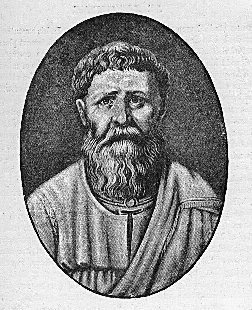
A Blast from the Past: What did Augustine and Arius have in common?

Answer: Both Arius and Augustine defined deity in terms of divine causality, thus understanding causality to be the essential attribute of deity rather than the hypostatic (i.e. personal) feature of the Father's monarchy.
In his argument against the later heresy of semi-Arianism, Augustine conceded this point, but went on to employ it in favor of the essential deity of Christ by positing the filioque doctrine. Thus Augustine saw the Son as the "cause," along with the Father, of another divine Person: the Holy Spirit. "For if the Son has of the Father whatever He has, then certainly He has of the Father that the Holy Spirit proceeds also from Him" (De Trinitate 15:26:47). In other words, the Son receives divine causality from the Father and thus is fully divine, for the Holy Spirit proceeds from both.
At this point the inconsistency in Augustine's view of the Trinity becomes apparent, for where does this leave the Holy Spirit? If the Holy Spirit is a fully divine hypostasis then wherein is manifested the attribute of causality?
Wednesday, July 05, 2006
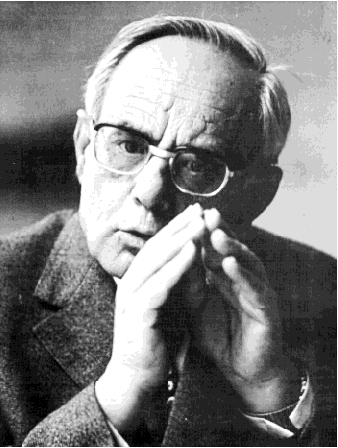
Karl Rahner on the Holy Trinity

Alright, I confess: I like Karl Rahner. He is difficult to read, even exasperating at times. I can only take him in small doses, but he makes me think even though I often find myself at variance with him. The way I see it he's worth the effort if only for the fact that he is perhaps the most important Roman theologian of the 20th century.
In particular I am attracted to Rahner's concept of human transcendence and how this relates to the Incarnation. But recently, in light of the discussions on this blog, I decided to review what he had to say about the Trinity in his monumental Foundations of Christian Faith (English translation, 1978). While I can't say that I was totally surprised to find elements of modalism in his understanding of the Trinity (after all, he is cut out of the same western Augustinian cloth), I will admit that I was shocked to see how blatent his modalism was. The following is an example of what I mean. What do you think?
Insofar as he has come as the salvation which divinizes us in the innermost center of the existence of the individual person, we call him really and truly "Holy Spirit" or "Holy Ghost." Insofar as in the concrete historicity of our existence one and the same God strictly as himself is present for us in Jesus Christ, and in himself, not in a representation, we call him "Logos" or the Son in an absolute sense. Insofar as this very God, who comes to us as Spirit and Logos, is and always remains the ineffable and holy mystery, the incomprensible ground and origin of his coming in the Son and in the Spirit, we call him the one God, the Father. Insofar as in the Spirit, in the Logos-Son, and in the Father we are dealing with a God who gives himself in the strictest sense, and not something else, not something different from himself, we must say in the strictest sense and equally of the Spirit, of the Logos-Son and of the Father that they are one and the same God in the unlimited fullness of the one Godhead and in possession of one and the same divine essence.
--Foundations of Christian Faith, p. 136.
Saturday, July 01, 2006
Gerald Bray "Gets It": His Discussion of Thomas Aquinas

Aquinas' debts to Augustine and Anselm are obvious, but he was determined to go beyond them and establish a clear distinction between the two divine 'processions', generation and procession (in the classical sense). 'Generation' was defined by Aquinas as an (intellectual) act of conception which produced its like, i.e. the Father reproduced his own likeness in the Son. 'Procession' he defined as an impulse of the divine will, which brings forth something other than a straightforward reproduction of itself. When this impulse is perfect, as it must be within the Godhead, the resulting product will also be fully God. Hence there is a real difference between the Son and the Holy Spirit, both of whom are fully God, although once again the Spirit fits only somewhat uncomfortably into what is basically an Augustinian model of the Trinity.
Not content to stop there, Aquinas used the terms 'paternity', 'filiation' and 'procession' to describe the divine relations. He distinguished them from the essence of God by saying that the former are relative, while the latter is absolute. His abstractions differ from those of the Cappadocians, for whom unbegottenness, begottenness and procession were the absolute distinctions of the hypostases. But like them, he has succumbed to a tendency towards philosophical abstraction which is very different from the spirit of the New Testament. The full effect can be seen in Thomas' definition of the word 'person'. As far as he was concerned, person was an aspect of a nature which signified what was distinct in that nature. Because distinction in God is only by relations of origin, a divine person is defined by Aquinas as a subsistent relation in the being of God. In other words, 'person' and 'relation' are synonymous, which means that one might easily dispose of the unphilosophical term 'person' and speak only of (Aristotelian) relations in God.
The trinitarianism of Anselm and Aquinas can rightly be criticized for being too philosophical, too abstract, and even reactionary, in the sense that it is dependent on the primacy of nature over person -- almost inevitable in any philosophical theology, but directly counter to the spirit of Chalcedonian christology. Unfortunately, christology and trinitarian theology tended to go their separate ways during the high Middle Ages, and they are still not always closely linked even today.
--Gerald Bray, The Doctrine of God (IVP, 1993), pp. 182-3
Friday, June 30, 2006
Thursday, June 29, 2006
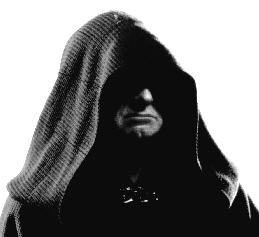
The Dark Lord of the Sith chimes in...

"The subordination of the Persons to the essence, inherent in the structure of his theology, also provides Augustine with the means to attempt to distinguish the Persons from each other. Having assumed an absolute simplicity, the Persons can no longer be absolute hypostases, but are merely relative terms to each other, thus occuring on an even lower plane than the attribute proper. 'The terms (Father, Son, and Holy Spirit) are used reciprocally and in relation to each other' [Augustine De Trinitate, 1:8:15]. There is a subtle, but nevertheless, real play of the dialectic of oppositions here. One no longer begins with the Three Persons and then moves to consider their relations, but begins with their relative quality, the relation between the Persons, itself. In other words, there is an artificial opposition of one Person to the other two. It is at this point that the flexibility of Augustine's Neoplatonic commitment begins to surface in a more acute form."
--Joseph Farrell, Introduction to The Mystagogy of the Holy Spirit of our Father among the Saints, Photius the Great, Patriarch of Constantiople (2001), p. xx-xxi.
Wednesday, June 28, 2006
Soundbite from Saint Photius the Great

"For it is not, I repeat, not the nature -- in other words, that which is common among the Three Hypostases -- which is worshipped, but the specific personal distinctions whereby the Hypostases of the Trinity are distinguished."
--Patriarch Photius, Concerning the Mystagogy of the Holy Spirit, 47 (translation by Joseph Farrell).
Tuesday, June 27, 2006
Quiz: Which of the following statements is the orthodox one?
OR
(2) In Scripture, God reveals Himself as the Father of Jesus Christ our Lord, and the One from whom the Holy Spirit proceeds.
MULTIPLE CHOICE:
A. Number 1.
B. Number 2.
C. Both statements are equally orthodox.D. Neither is orthodox.
Monday, June 26, 2006
What did Augustine and Arius have in common?

Answer: Both Arius and Augustine defined deity in terms of divine causality, thus understanding causality to be the essential attribute of deity rather than the hypostatic (i.e. personal) feature of the Father's monarchy.
In this confusion of Person, nature and attribute, Arius went on to assert that only the Father was truly God, for the Logos was begotten of the Father. Thus Christ could not be fully divine in that he was "caused by," and in no way the "cause of," the Father. Divine causality and essential deity are inextricably mixed.
In his argument against the later heresy of semi-Arianism, Augustine conceded this point, but went on to employ it in favor of the essential deity of Christ by positing the filioque doctrine. Thus Augustine saw the Son as the "cause," along with the Father, of another divine Person: the Holy Spirit. "For if the Son has of the Father whatever He has, then certainly He has of the Father that the Holy Spirit proceeds also from Him" (De Trinitate 15:26:47). In other words, the Son receives divine causality from the Father and thus is fully divine, for the Holy Spirit proceeds from both.
At this point the inconsistency in Augustine's view of the Trinity becomes apparent, for where does this leave the Holy Spirit? If the Holy Spirit is a fully divine hypostasis then wherein is manifested the attribute of causality?
Food for thought.
Until next time.
P.S. I am indebted to my friend, Dr. Joseph Farrell (+Photius), for these insights.
Augustine's Confusion of Nature, Attribute, and Person in the Godhead

He is called in respect to Himself both God, and great, and good, and just, and anything else of the kind; and just as to Him to be is the same as to be God, or to be great, or as to be good, so it is the same thing to Him to be as to be a person (De Trinitate 7:6:11, from Schaff's The Nicene and Post-Nicene Fathers [1st series], pp. 111-12).